
What Safety Features Should a Dredging Vessel Have?
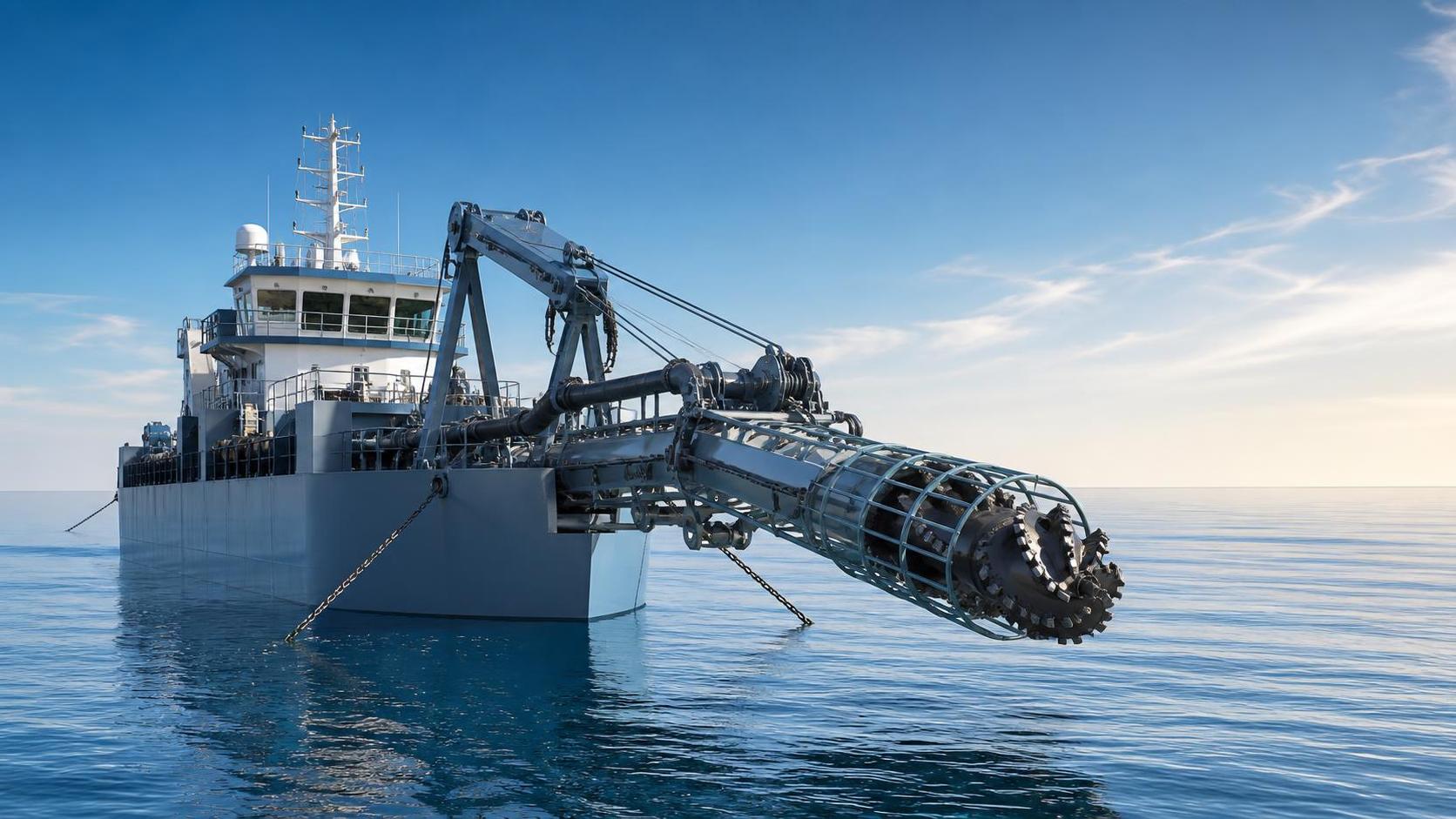
Dredging vessels work where operating conditions change quickly: shallow channels, shifting seabeds, floating debris, commercial traffic, unstable banks, strong currents, and often limited room to maneuver. In that environment, safety is not a separate package added after the vessel is designed. It is a combination of structural strength, machinery protection, navigation capability, crew procedures, and the ability to stop or recover from a failure before it becomes an incident.
For operators, owners, and procurement teams asking what safety features a dredging vessel should have, the practical question is usually more specific: what level of safety is needed for this dredging method, waterway, crew size, operating schedule, and regulatory environment? A small cutter suction dredger working in a sheltered pond does not face the same risks as a self-propelled vessel dredging a busy river channel or coastal harbor. Yet the main safety principles remain consistent. The vessel must protect people, prevent equipment damage, maintain control during abnormal conditions, and make hazards visible early enough for the crew to act.
Start with the operational risk, not the equipment brochure
A dredging vessel may combine propulsion machinery, pumps, suction lines, discharge pipelines, rotating cutter heads, cranes, electrical systems, fuel storage, hydraulic equipment, and accommodation spaces in one compact working platform. Each system has its own failure modes, but the most serious incidents often occur when failures overlap.
For example, a blocked suction line may cause pump overload. If the crew cannot identify the abnormal pressure quickly, the system may be damaged. If access to the affected area is poor, maintenance personnel may face slip, entanglement, or confined-space risks while attempting a repair. If the vessel is operating close to other traffic, reduced maneuverability can turn a mechanical problem into a collision risk.
That is why a useful safety review begins with the actual duty cycle:
- Will the dredger operate in inland waterways, ports, lakes, rivers, offshore areas, or mining ponds?
- Will it be self-propelled, towed, stationary, modular, or mounted on a barge?
- How close will it work to bridges, embankments, pipelines, intake structures, public areas, or active navigation lanes?
- Does the job involve abrasive sand, stones, debris, contaminated sediment, or potentially explosive materials?
- Will operations continue at night, in poor visibility, in cold weather, or during seasonal high-water conditions?
- How many people will be aboard, and how experienced are they with dredging-specific hazards?
The answers affect the design specification. A vessel that is mechanically capable of moving sediment may still be an unsuitable choice if its access arrangements, emergency systems, stability margin, electrical protection, or navigation equipment do not match the project conditions.
Emergency shutdown must stop the right systems quickly
Emergency shutdown is one of the most important protections on a dredging vessel, but the presence of a red push button alone is not enough. Operators should understand exactly what happens when an emergency stop is activated. Depending on the vessel design, the shutdown logic may need to stop the dredge pump, cutter drive, winches, hydraulic power unit, propulsion system, fuel supply, or selected electrical circuits. It must also avoid creating a secondary hazard, such as losing essential steering or bilge capability at the wrong moment.
Emergency stop stations should be positioned where personnel can reach them without crossing a hazardous area. Typical locations include the main control station, machinery spaces, deck work areas, pump areas, and locations near high-risk rotating equipment. They should be clearly marked, protected against accidental activation, and tested as part of commissioning and routine maintenance.
More important than button placement is system behavior. The vessel should have alarms and interlocks that act before a dangerous condition becomes critical. Common examples include:
- High temperature and low lubrication-pressure alarms for engines, gearboxes, pumps, and hydraulic systems.
- Overload protection for cutter drives, winches, motors, generators, and dredge pumps.
- High-pressure and low-pressure alarms for slurry, hydraulic, and cooling circuits.
- Automatic trips or controlled shutdowns for severe pump vibration, bearing overheating, electrical faults, or loss of cooling water.
- Emergency fuel shutoff arrangements that are accessible from outside the machinery space.
- Bilge high-level alarms and automatic or remotely controlled bilge pumping where appropriate.
Interlocks should be designed around real operating sequences. A cutter head should not start unexpectedly while personnel are working nearby. A pump should not be restarted after a trip without confirmation that the line is clear and the surrounding area is safe. Maintenance isolation points should support lockout and tagout procedures, especially where electrical, hydraulic, pneumatic, and mechanical energy sources are present.
Navigation and station-keeping are safety systems
Dredging is frequently treated as a production activity, but a working dredger is still a vessel or floating work platform operating in a water environment. Good navigation equipment reduces the likelihood of collision, grounding, striking submerged infrastructure, or drifting outside the work zone.
The required equipment will depend on vessel class, flag requirements, waterway rules, and location. In many operating environments, the safety package may include suitable navigation lights, radar or an equivalent collision-awareness system, AIS where required or operationally useful, VHF communications, depth measurement, GPS positioning, sound signals, and reliable chart or site-plan access. These should not be selected simply because they appear on a specification sheet. They must be usable from the operator's station, visible in daylight and darkness, and supported by procedures for interpreting alarms and traffic information.
For stationary or anchored dredgers, station-keeping is equally important. Spuds, anchors, winches, swing wires, positioning piles, and mooring systems create substantial line-of-fire hazards. A broken wire, overloaded anchor winch, failed spud carriage, or unstable pontoon can injure crew members and put the vessel out of position. Design reviews should consider safe working loads, guarding, line routes, inspection access, overload protection, emergency release arrangements, and clear exclusion zones on deck.
One common mistake is to focus on the holding capacity of the anchoring system without considering what happens during recovery or failure. Safe station-keeping requires visible load indication where practicable, communication between the operator and deck crew, and procedures for changing water levels, current direction, passing vessel wash, and sudden weather deterioration.
Fire protection needs to account for fuel, hydraulics, and electrical rooms
Dredgers often carry diesel fuel, lubricants, hydraulic oil, batteries, electrical switchboards, and hot machinery within confined spaces. Fire risks are not limited to an engine room. Hydraulic leaks near hot surfaces, overloaded electrical cables, poorly maintained battery systems, welding work, and temporary electrical connections can all initiate a fire.
A credible fire-safety arrangement includes both prevention and response. Fuel and hydraulic piping should be routed and secured to reduce exposure to heat, impact, and vibration. Hot surfaces should be insulated or guarded where leakage could contact them. Machinery spaces need ventilation suited to the equipment installed, while ventilation closures and remote shutoffs should be available for emergency use when required by the vessel arrangement.
Portable extinguishers must be selected for the likely fire classes and placed where personnel can reach them safely. Larger vessels may require fixed fire suppression systems in machinery spaces, fire pumps, hydrants, hoses, and fire detection systems, subject to applicable rules. The key procurement question is not simply whether extinguishers are supplied. It is whether the vessel has enough detection, isolation, suppression, escape, and crew training capacity for the consequences of a fire in that particular area.
Fire doors, escape routes, emergency lighting, and clear signage become especially important when a vessel operates at night or carries accommodation. Escape routes should remain available even if the main machinery space or a deck work zone is obstructed. In practice, an emergency path that is technically present but blocked by hoses, spare parts, or temporary tools is not a reliable safety feature.
Protect the crew from rotating equipment and deck hazards
The most frequent day-to-day exposure on a dredger often comes from moving machinery rather than dramatic marine emergencies. Cutter drives, winches, belt drives, couplings, pumps, conveyors, cranes, and lifting equipment can trap, crush, strike, or entangle personnel. Guards are therefore basic equipment, not optional finishing details.
Machine guards should cover accessible rotating parts while still allowing necessary inspection and maintenance. Removable guards need secure fixing methods and should not be so cumbersome that crews routinely leave them off after maintenance. Where access doors or panels expose hazardous movement, electrical or mechanical interlocks may be justified.
Deck safety also deserves close attention. Dredging decks can become wet, muddy, oily, uneven, and crowded with hoses or cables. A practical vessel should provide anti-slip walkways, handrails, toe boards where relevant, adequate deck drainage, safe ladders, and properly arranged work platforms. Lighting should cover transfer points, winch areas, access routes, maintenance points, and emergency equipment. Poor lighting does not merely make work less convenient; it increases the chance that crews miss leaks, loose lines, obstructions, or people in hazardous zones.
Lifting operations require their own safeguards. A dredger may use cranes or davits for pipeline sections, cutter components, anchors, tools, spares, and maintenance work. Lifting points should be rated and identified, lifting appliances inspected, and controls positioned to give the operator a clear view or reliable communication with a signaler. Loads should not routinely travel over occupied work areas. Where they must, the work process needs stricter controls.
Structural integrity and stability cannot be checked only at delivery
A vessel's structure is its first line of defense against flooding, fatigue, and mechanical damage. Dredging produces cyclic loads from pumping, cutter operation, vibration, wave action, anchoring, and repeated movement of heavy equipment. In abrasive service, wear can gradually reduce the integrity of hull plating, pipelines, pump casings, and fittings.
For buyers, structural safety begins with design and manufacturing discipline. Steel cutting accuracy, fit-up control, welding procedures, weld inspection, alignment of machinery foundations, pressure testing, and final water testing all influence reliability. A modern manufacturing base with CNC cutting, controlled welding processes, and automated assembly can support consistency, but these capabilities should be connected to documented inspection points rather than treated as marketing language.
Useful questions during supplier evaluation include:
- Which structural areas receive additional reinforcement for dredging loads and local impact?
- What welding procedures and inspection methods are used for critical hull and machinery-supporting structures?
- How are watertight compartments, hatches, pipe penetrations, and deck openings tested?
- What corrosion protection system is specified for the intended water conditions?
- How are pump-room, engine-room, and hull bilges arranged, monitored, and maintained?
- What testing is completed before handover, and what records are provided to the operator?
Stability requires the same discipline. Adding a larger pump, taller cabin, heavier crane, pipeline rack, fuel tank, or accommodation module can change the vessel's center of gravity. Dredging operations may also create uneven deck loading as hoses, anchors, tools, and recovered debris shift around the platform. The stability assessment should reflect the vessel's actual working configuration, not only an empty or simplified condition. Applicable flag-state, class, or local authority requirements should be confirmed for the planned operation.
Flooding control is more than a bilge pump
Hull damage, failed hoses, leaking seals, open deck fittings, and damaged pipe penetrations can introduce water into spaces that were not designed to be wet. Dredgers operating near banks, rocks, debris, or shallow bottoms may face a higher likelihood of minor impacts than conventional vessels.
Watertight subdivision, properly maintained doors and hatches, high-level alarms, bilge wells, strainers, non-return valves, and bilge pumping capacity all contribute to survivability. The crew must also know where water is entering and whether it is safe to continue operating. Alarm panels should identify the affected compartment clearly enough for prompt action.
Portable pumps can be valuable as backup, particularly on remote projects, but they should not substitute for an engineered bilge system. Operators should verify suction access, discharge routing, power availability, hose condition, and the ability to deploy equipment without exposing crew members to an unsafe compartment.
Electrical safety and control-system resilience are becoming more important
Modern dredgers increasingly rely on PLC controls, variable-frequency drives, sensors, digital monitoring, remote diagnostics, and integrated positioning systems. These can improve efficiency and fault detection, but they also create dependency on electrical power and control logic.
A safe design separates essential functions from non-essential loads where practical. Emergency lighting, communications, alarms, navigation aids, bilge functions, and critical control systems may need backup power or alternate operating arrangements. Electrical cabinets should be appropriately protected against water ingress, heat, vibration, and dust. Cable routing must avoid mechanical damage and allow safe inspection.
Control screens should help operators recognize abnormal conditions rather than burying them in excessive alarms. Alarm fatigue is a real operating problem: when every minor event produces the same audible warning, crews may stop treating alarms as meaningful. Priority levels, clear fault descriptions, event logging, and a manageable reset process make a control system more useful during a genuine emergency.
Safety features only work when maintenance is built into the vessel
Many dredging safety failures are not caused by the absence of equipment. They arise because the equipment is difficult to inspect, poorly maintained, bypassed during production pressure, or misunderstood by the crew. A vessel with advanced automation but inaccessible strainers, cramped machinery access, unmarked valves, and unclear maintenance points can become harder to operate safely than a simpler, well-organized design.
Procurement teams should examine maintainability during design review and factory acceptance. Can crews reach filters, valves, pump seals, electrical panels, fire equipment, bilge strainers, and emergency shutoffs without climbing over hot or moving equipment? Are spare parts identified? Are hydraulic and electrical schematics available? Is there sufficient space to remove a pump component or motor safely? Can testing be repeated in the field after delivery?
Standardized manufacturing workflows matter here because consistency makes inspection and service more predictable. Precision fabrication, controlled welding, traceable assembly, and documented water testing cannot eliminate operational risks, but they reduce the chance that basic construction defects are transferred to the job site. The operator should still treat commissioning as the beginning of the safety process, not its conclusion.
A practical acceptance checklist
Before accepting a dredging vessel, the buyer should move beyond a visual walkthrough. Functional tests should reflect credible failures and normal operating transitions. The following areas are worth witnessing or verifying through records:
The final decision should not be based on whether every feature sounds impressive. It should be based on whether the vessel can remain controlled when something predictable goes wrong: a blocked line, pump trip, hydraulic leak, power interruption, damaged mooring wire, rising bilge level, sudden traffic conflict, or a crew member needing to stop work immediately.
A well-specified dredging vessel makes safe action easier under pressure. That is the standard worth applying when comparing designs, reviewing factory tests, or planning the first operating season.
Navigation
- How Can Noise Be Reduced During Port and Harbor Dredging Operations?
- What Is the Difference Between an Excavator Platform and a Barge-Mounted Dredge?
- Does Industrial Sand Dredging Require Water Discharge Permits?
- What Safety Features Should a Dredging Vessel Have?
- How to Calculate Dredging Volume for a River Project Bid
- Is Cutter Suction Dredging Better Than Bucket-Chain Dredging for Hardpan?
Send Us A Message