
How to Transport an Excavator Platform to a Remote Job Site
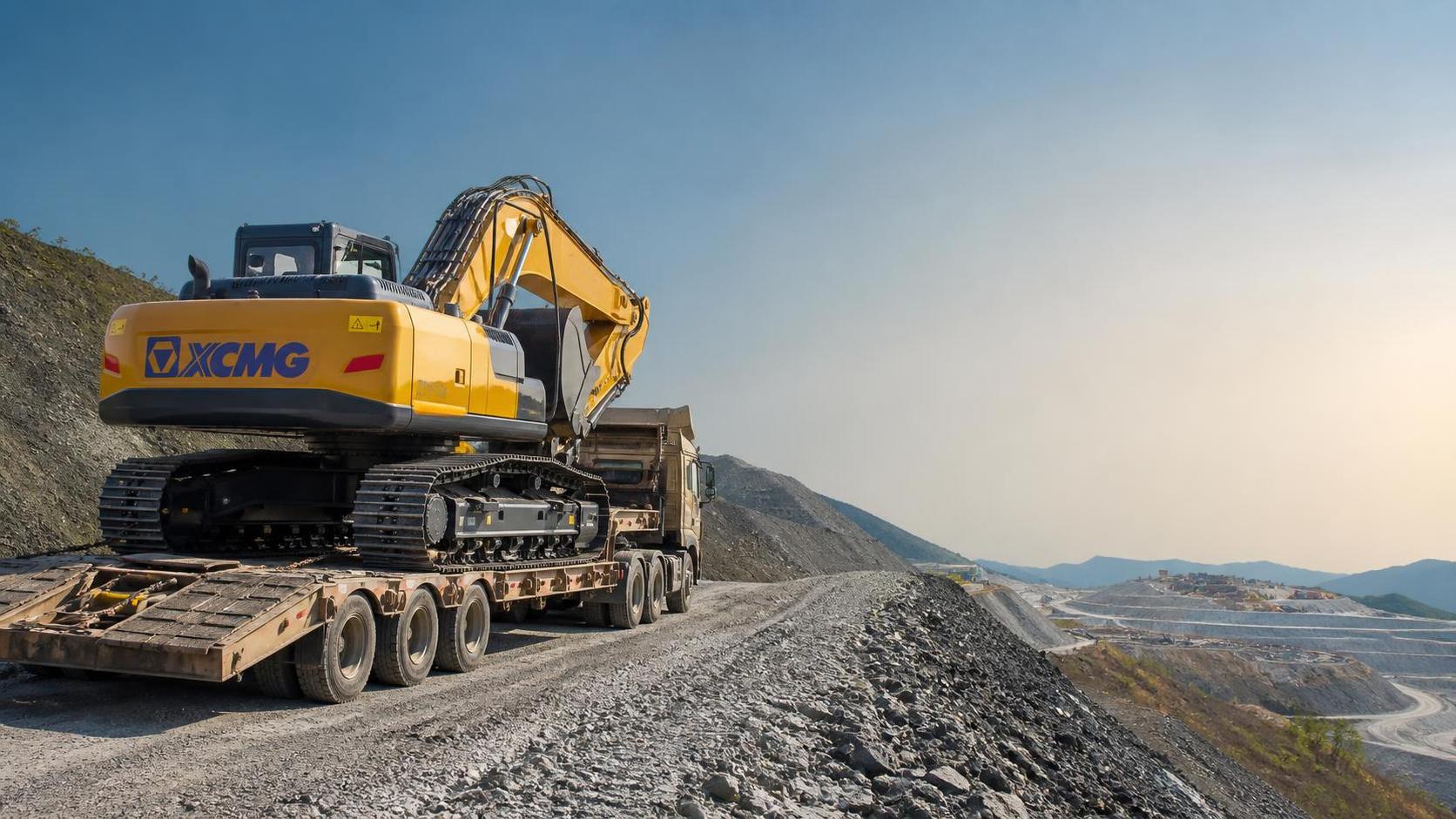
A transport plan can look straightforward until the excavator is loaded, the truck reaches the last paved road, and someone realizes that the site entrance is narrower, softer, or steeper than expected. This is a common problem on dredging, earthmoving, drainage, quarry, and infrastructure work where the machine is needed far from a normal logistics route. A delivery delay may hold up operators, support equipment, fuel supply, and the work sequence that depends on the excavator being ready first.
Knowing how to transport an excavator platform to a remote job site is therefore not only about finding a trailer with enough capacity. It means matching the transport arrangement to the machine, the route, the loading conditions, and the actual ground situation at the destination. The safest plan is usually built before the excavator reaches the loading point, not corrected after the transport vehicle is already committed to a difficult road.
Start by defining the machine in transport condition
Transport decisions should be based on the excavator as it will travel, not just on the base machine listed in a brochure or equipment file. An excavator may have a boom, stick, bucket, quick coupler, side-mounted equipment, guards, pontoons, a working platform attachment, or other tools that change its overall length, height, width, and center of gravity.
Before selecting a trailer, record the following details from the actual machine and attachments:
- Operating weight, including any attachment that will remain installed during transport.
- Overall width with tracks, stabilizers, extensions, or side equipment in the transport position.
- Overall height with the boom lowered and secured according to the manufacturer’s transport guidance.
- Overall length, including the bucket, attachment, or rear overhang.
- Ground clearance and track contact area.
- Known lifting, tie-down, and towing points.
These measurements affect more than legal road clearance. They influence trailer deck length, axle loading, ramp angle, turning space, and whether the load can pass under trees, power lines, structures, or temporary site gates. A machine that fits on a main highway may still be unsuitable for the final approach if its height or tail swing is not considered.
If the excavator platform includes removable components, decide early whether it is safer to transport those parts separately. Removing an attachment can reduce transport height or weight, but it also creates another lifting operation and another load that must be secured. The better option depends on the handling equipment available at both ends of the trip and on whether the site has stable space for reassembly.
The last section of the route deserves the most attention
Remote work sites often create a misleading planning gap. The primary route may be wide and suitable for heavy transport, while the final few kilometers involve local roads, temporary haul roads, farm tracks, flood-prone ground, sharp bends, or bridges with uncertain capacity. This last section is where many otherwise sensible plans fail.
Review the route from loading point to unloading point, but do not rely only on a mapping application. Maps may not show seasonal restrictions, recent washouts, informal detours, low branches, temporary utility lines, or the actual width between roadside obstacles. Where practical, arrange a route survey by someone who understands heavy-equipment movement.
Pay particular attention to bridge decks, culverts, drainage crossings, soft shoulders, and road edges. A loaded trailer can place a different type of stress on a route than ordinary site vehicles. Narrow roads also introduce a recovery problem: if the transport truck has to reverse a long distance or cannot turn around, the delivery may become unsafe even if the road itself remains passable.
Questions that reveal route problems early
Rather than asking only whether a road is “accessible,” ask more specific questions. Is there a firm location to stop and inspect the load before the unpaved section? Can the truck approach a bend without placing wheels on a soft shoulder? Are there overhead obstructions after rain or wind has lowered branches? Can another vehicle pass if the transport unit must stop? Is there a turning area at the unloading point?
Weather should be treated as part of route planning, especially where access roads are made from compacted soil, gravel, sand, or reclaimed material. A route suitable in dry conditions may become unsuitable after prolonged rain. If timing is flexible, it is often safer to plan an alternate delivery window than to force a loaded vehicle onto saturated ground.
Choose the transport configuration around access, not habit
A low-loader, detachable gooseneck trailer, step-deck arrangement, or other heavy-haul configuration may each be appropriate depending on the machine dimensions and loading method. There is no universally correct trailer. The key is to compare the machine’s transport condition against the practical limits of the route and destination.
A low deck can help control overall transport height, which matters where overhead clearance is limited. However, lower equipment may have reduced clearance on uneven access roads, crests, or temporary ramps. A trailer with a loading approach that is convenient at a paved yard may also be difficult to position on a remote site with uneven ground.
Consider these operational factors before confirming the transport unit:
- Whether the excavator can drive onto the trailer safely, or whether lifting is required.
- The ramp angle relative to the excavator’s track geometry and attachment position.
- Deck strength and axle distribution for the machine’s actual weight.
- Clearance below the trailer on uneven roads, ramps, and site entrances.
- Availability of a stable unloading area with enough room for the truck to align.
- Whether the selected vehicle can turn around or leave the site without difficult reversing.
For remote work, a slightly less convenient loading arrangement at the departure point can be preferable if it gives the transport team better control at the destination. The unload is often the more critical stage because the site surface may be unfinished and site traffic may be less organized than at the equipment yard.
Prepare the loading area before the transport vehicle arrives
Loading should take place on firm, level ground whenever possible. A sloped or uneven loading area can alter ramp contact, increase the risk of track slip, and make it harder for the operator to maintain alignment. Loose material around ramps should be cleared, and the route from the machine’s parking position to the trailer should be checked for obstacles.
Before the excavator moves, confirm that the attachment is positioned for transport, the upper structure is aligned as required, and loose items have been removed or secured. Cab doors, access panels, toolboxes, removable guards, and auxiliary hoses should not be left to move freely during transit. If an attachment has pins or locking mechanisms, verify their condition before loading rather than assuming they are secure because the machine has been operating normally.
Communication matters during this stage. The excavator operator, transport driver, and signal person should agree on stop signals and movement direction before loading begins. One person should direct the final approach onto the trailer. Multiple people giving instructions at once can cause unnecessary corrections, especially when ramps are narrow or visibility from the cab is limited.
Secure the excavator as a moving load, not a parked machine
Once the excavator is on the trailer, it should be positioned to achieve acceptable axle loading and stable weight distribution. Placing the machine too far forward or rearward can affect steering, braking, and trailer behavior. The correct position depends on the trailer design and the transport provider’s loading plan, so this should be confirmed before the machine is driven aboard.
Lower the boom and attachment into the intended travel position and isolate any movement that could occur from vibration or hydraulic drift. The upper structure should be locked or restrained where the machine design and transport method require it. Do not depend on the hydraulic system alone to prevent movement during a long journey over rough roads.
Use rated securing equipment appropriate for the load and apply it to approved tie-down points. Chains, binders, tensioning devices, blocking, and edge protection must be compatible with the machine and the trailer. Track machines may need restraint at more than one location to control forward, rearward, and lateral movement. The exact arrangement should follow the equipment manufacturer’s instructions, the transport provider’s procedures, and applicable transport requirements.
After the initial securing is complete, inspect the load from both sides. Look for slack chain, contact between securement equipment and hoses, sharp edges that could damage straps, unsecured attachments, and components that may shift into the truck or trailer structure. A second inspection after the vehicle has traveled a short distance is useful because the load can settle, particularly after crossing ramps or rough ground.
Plan the destination as an unloading operation, not simply an arrival point
A remote job site should have a designated unloading zone, even if the area is temporary. The zone needs sufficient bearing capacity for the truck and trailer, a reasonably level surface, room to deploy ramps or separate the trailer configuration, and a clear exit route. If site personnel have been grading or placing fill, confirm whether the surface is compacted enough for loaded transport equipment rather than assuming a smooth surface is stable.
Keep other vehicles, materials, and pedestrians away from the unloading path. This is particularly important where the excavator must reverse or turn immediately after leaving the trailer. The operator should know where the machine will park after unloading and whether it needs to move directly to a work area, refueling point, or assembly area.
On confined sites, it may be necessary to unload at a nearby suitable location and move the excavator to the final work zone under its own power. This adds time, but it can be safer than trying to bring a large transport vehicle onto ground that cannot support it. The travel path for the excavator should then be checked for slopes, buried services, soft ground, and crossing points that may not support track loads.
When the route changes after dispatch
Remote work conditions can change quickly. A gate may be blocked, rain may damage a temporary road, or another contractor may occupy the planned unloading area. If this happens, avoid making improvised decisions while the transport unit is already in a tight space. Stop at a safe location where the vehicle can remain stable and where the driver can assess options without obstructing traffic.
The response should focus on facts: whether the alternate route has adequate width and bearing capacity, whether its turning points are usable, whether overhead clearance is known, and whether unloading can still occur on stable ground. Sending a site representative to inspect the revised access route is often more useful than relying on verbal assurances that “the truck should fit.”
If the original plan is no longer safe, rescheduling or arranging an alternate unloading location may be the responsible decision. The cost of a delay is usually easier to manage than a trailer recovery, equipment damage, or injury caused by forcing a heavy load through unsuitable terrain.
A practical handover before the machine starts work
Transport is not finished when the excavator touches the ground. Before releasing the transport team, inspect the machine for any shifted attachments, damaged hoses, loose panels, track issues, or contact marks around tie-down locations. Remove securing equipment carefully and confirm that no chains, blocks, or tools remain under or near the tracks.
The operator should then complete the normal pre-start inspection before moving into service. If the machine has been transported with an attachment removed, reinstallation should occur on stable ground using appropriate lifting and handling methods. A rushed reassembly beside an access road can create the next problem just after the transport problem has been solved.
The most reliable answer to how to transport an excavator platform to a remote job site is to treat the journey as a connected sequence: machine preparation, route verification, trailer selection, controlled loading, secure restraint, and a planned unload. When each stage is checked against the real site conditions, remote access becomes a manageable logistics task rather than a last-minute obstacle.
Navigation
- How Can Noise Be Reduced During Port and Harbor Dredging Operations?
- What Is the Difference Between an Excavator Platform and a Barge-Mounted Dredge?
- Does Industrial Sand Dredging Require Water Discharge Permits?
- What Safety Features Should a Dredging Vessel Have?
- How to Calculate Dredging Volume for a River Project Bid
- Is Cutter Suction Dredging Better Than Bucket-Chain Dredging for Hardpan?
Send Us A Message