
What maintenance records should be checked before buying dredging equipment?
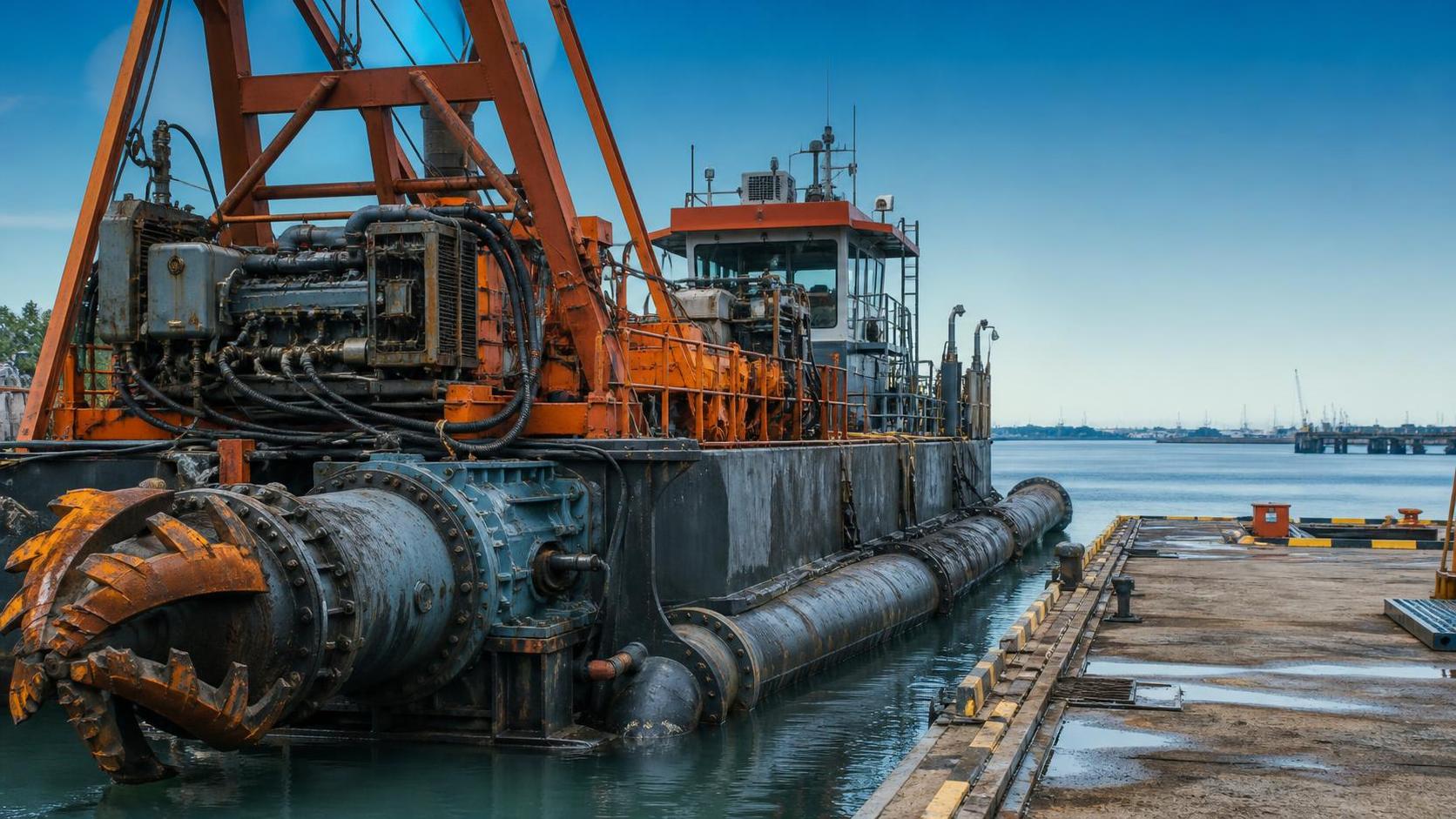
Before purchasing used dredging equipment, maintenance records should be reviewed as carefully as the machine itself. A dredger can appear serviceable during a short inspection yet carry a history of deferred repairs, repeated pump failures, overheating, hydraulic contamination, or structural work that will materially change its operating cost. The records are not merely proof that work was performed. Read together, they show how the equipment was operated, whether faults were addressed at their cause, how much useful life may remain, and how credible the seller’s condition claims are.
This matters because dredgers are exposed to abrasive solids, variable loads, corrosion, vibration, and often irregular operating schedules. Wear does not develop evenly. A vessel that has completed relatively few hours in coarse sand, high-solids slurry, salt water, or congested reclamation work may be in worse condition than an older unit working in softer material under a disciplined maintenance program. The relevant question is not “Has it been maintained?” but “What does the maintenance history say about wear, failure patterns, and the next major cost?”
Start by testing whether the records are complete and believable
A maintenance file should establish a coherent timeline from commissioning or acquisition to the present. It does not need to contain every minor consumable purchase, especially on older equipment, but the major systems should have traceable service history. At a minimum, the documents should allow a buyer to compare operating hours, dates, work descriptions, parts used, service providers, and the reason for each repair.
Look for consistency across the following sources:
- daily or shift operating logs;
- planned maintenance schedules and completion sheets;
- engine-hour records and fuel logs;
- work orders and workshop reports;
- invoices for major parts and overhauls;
- class, flag-state, or local inspection records where applicable;
- condition-monitoring reports, such as oil analysis or vibration reports;
- dry-dock, hull survey, and coating repair records.
The first practical check is whether hours progress logically. A main engine report showing 8,000 hours, a pump overhaul invoice recorded at 11,000 hours, and current controls showing 7,500 hours require explanation. Hour-meter replacement can be legitimate, but it should be documented and reconciled to total accumulated operating hours. The same applies to dredge-pump hours, cutterhead hours, booster-pump hours, generator hours, and hydraulic power-pack hours. On equipment with several engines or pumps, relying on the main engine meter alone can conceal the actual duty performed by high-wear components.
Gaps are not automatically disqualifying. Family-owned operators, projects in remote locations, and older fleets may have imperfect records. However, a long gap immediately before sale, repeated references to “general repair” without detail, or a stack of recent cosmetic invoices should increase the allowance for hidden work. When documentary quality is weak, the inspection scope should become more conservative and the price should reflect uncertainty rather than assumed good condition.
Engine records: focus on load history, not just servicing
Main and auxiliary engines are among the most expensive sources of unplanned downtime, but an oil-change log alone says little about engine health. Review scheduled maintenance records for oil and filter changes, cooling-system servicing, valve adjustments where specified by the manufacturer, fuel-system work, turbocharger servicing, and major overhaul activity. Verify that service intervals broadly align with the engine maker’s requirements and actual running hours.
More important is the history behind any major intervention. Records of injector replacement, turbocharger failure, cylinder-head removal, bearing work, crankcase repairs, overheating, or repeated alarm events should be read closely. A single repair after a known incident can be acceptable if there is evidence of root-cause correction and stable operation afterward. Recurrent work on the same issue may point to poor cooling-water quality, contaminated fuel, overloading, inadequate ventilation, or unresolved alignment problems.
Oil-analysis reports can be highly useful when they cover several sampling periods rather than one recent sample. Trends in wear metals, soot, fuel dilution, water contamination, viscosity, and total base number can reveal developing issues. They should not be interpreted in isolation: laboratory comments, oil type, sampling method, and drain interval all matter. Still, a consistent trend is usually more informative than a seller’s statement that the engine “runs well.”
For diesel-electric dredging equipment, records for generators, switchgear, control systems, and load-sharing equipment deserve equal attention. Generator maintenance may have been deferred because the dredging plant can still operate intermittently, but a generator failure can immobilize the whole project. Ask whether load-bank testing, insulation-resistance testing, and protective-device checks have been performed where appropriate.
The dredge pump history often determines the real cost of ownership
In many dredging applications, the pump train is the commercial heart of the machine. Its records should identify the pump model, serial number, impeller type, liner arrangement, shaft and bearing configuration, and any modifications made during its service life. “Pump repaired” is not a sufficient description. The file should distinguish between routine replacement of wet-end wear parts and major mechanical repair involving shafts, bearings, seals, housings, or drive components.
Pay particular attention to the frequency of replacement for impellers, liners, throatbushes, suction liners, gland packing or mechanical seals, and wear plates. There is no universal acceptable replacement interval because material gradation, slurry concentration, pump speed, and operating discipline vary greatly. The useful comparison is with the dredger’s stated application. Very short wet-end life may be normal in gravel or hard abrasive sand; the same pattern in a light-silt application could indicate operation outside the pump’s efficient range, cavitation, poor suction conditions, or unsuitable materials.
Records should also show whether clearances were measured and adjusted. Excessive clearance between impeller and liner reduces pumping efficiency and can encourage operators to increase speed or power to maintain production. That response raises fuel consumption and accelerates wear. A machine may therefore meet a brief demonstration target while consuming more energy and carrying a near-term rebuild liability.
Check for evidence of cavitation, repeated seal failure, shaft runout, bearing temperature alarms, or cracks in the casing and suction pipework. These are not simply maintenance events; they may indicate deeper hydraulic or mechanical problems. If the pump was changed or rebuilt shortly before sale, request commissioning data, repair specifications, balancing reports if available, and the identity of the repairer. A “new pump” may mean a complete warranted assembly, a refurbished unit, or only a new impeller and liner set.
Hydraulic systems require records beyond hose replacement
Hydraulic failures can be costly because contamination and heat affect multiple components at once. Records for cutterhead drives, winches, ladder hoists, spud systems, swing systems, and auxiliary cylinders should include filter changes, oil type and quantity, oil-analysis results where available, pump and motor repairs, pressure testing, hose replacements, and leak repairs.
The strongest warning signs are repeated hose bursts, recurring pump failures, frequent overheating, valve block repairs, or unexplained additions of hydraulic oil. A hose can fail from age or external damage, but repeated failures in the same circuit may result from pressure spikes, incorrect hose specification, poor routing, inadequate clamping, or a malfunctioning relief valve. Replacing hoses without correcting the underlying cause creates a misleading appearance of maintenance activity.
Oil cleanliness is especially important on modern proportional valves, variable-displacement pumps, and electronically controlled hydraulic systems. Review whether filtration practices and oil grades match the component manufacturers’ requirements. If there are laboratory reports, compare cleanliness trends over time rather than relying on one clean sample taken after an oil change. Dark oil is not, by itself, a diagnosis; metallic particles, elevated silicon, water ingress, or deteriorated additive levels carry more meaning when assessed with the system’s service history.
Where possible, reconcile repair records with the physical condition of cylinders, rods, hoses, manifolds, and pumps during inspection. Fresh paint around a cylinder base, newly installed hoses on an otherwise aged circuit, or unmatched components may be perfectly reasonable, but each should correspond to a documented event.
Do not treat hull, structure, and pipeline documentation as secondary
Mechanical records often receive more attention than the hull, yet structural repairs can have a larger impact on safety, transportability, and remaining life. For floating or pontoon-mounted dredging equipment, request dry-dock reports, thickness measurements, welding-repair records, coating history, and any available survey documentation. Areas around pump-room foundations, ladder pivots, spud wells, hull penetrations, discharge connections, and deck machinery supports are exposed to concentrated loads and corrosion.
Thickness readings are most valuable when they are location-specific and comparable over time. A recent report stating that the hull is “in good condition” is less useful than a survey grid identifying measured plate thicknesses, corrosion patterns, repaired areas, and recommendations. Significant steel renewal is not necessarily a reason to reject the asset. Properly designed and documented renewal can extend service life. The concern is undocumented patching, recurring cracks, or repairs made without identifying why the damage occurred.
Pipeline and discharge-system records should also be reviewed. Floating pipe, shore pipe, rubber hoses, couplings, pontoons, booster stations, and bends experience abrasion and pressure cycling. Repeated leakage at couplings may be an operational issue; widespread pipe-wall loss may require a capital replacement program. Confirm the actual pipe diameter, wall thickness, pressure rating, coupling standard, and remaining inventory of spare pipe. A dredger offered with “pipeline included” can have a sharply different value depending on the condition and compatibility of that pipeline.
Replacement-parts records reveal both supportability and operating discipline
Parts documentation is useful for more than confirming expenditure. It shows whether the operator used original equipment manufacturer parts, reputable aftermarket alternatives, locally fabricated items, or a mixture of all three. None of these categories is automatically unacceptable. In remote projects, qualified local fabrication can be necessary and economical. The issue is traceability and suitability for critical components.
For engines, pumps, gearboxes, electrical controls, and hydraulic systems, identify part numbers and suppliers for major replacements. Confirm whether key wear items and seals remain available in the destination market. Older dredging equipment may be attractively priced but dependent on discontinued electronic modules, obsolete engine variants, proprietary pump castings, or nonstandard bearings. The cost of fabrication, air freight, or prolonged downtime can outweigh the initial discount.
A well-managed spare-parts list should state what is on hand, its condition, storage method, and relevance to the installed configuration. Spares should be physically verified. A crate labelled “pump parts” is not equivalent to a complete, correctly sized set of liners, impellers, glands, fasteners, and seals. Check whether parts have been exposed to moisture, whether rubber items have aged in storage, and whether electronic components are protected from humidity.
Use maintenance history to estimate the next 12 to 24 months, not the past
The commercial value of records lies in converting historical information into a forward-looking cost estimate. A useful review identifies the likely timing of major events: engine overhaul, pump wet-end renewal, hydraulic pump replacement, dry-docking, structural steel work, control-system upgrades, pipeline renewal, or compliance-related modifications.
Build a condition-based cost register rather than accepting a single “maintenance budget” from the seller. Separate items into three groups: work required before mobilization, predictable wear items during the first operating season, and lower-probability but high-impact risks. Include freight, lifting, commissioning, specialist labor, customs exposure for imported parts, and lost production time where relevant. For cross-border transactions, confirm whether original manuals, electrical drawings, conformity documents, and ownership records will travel with the equipment; missing documentation can slow re-registration, insurance, inspection, or import procedures.
Maintenance records also help assess whether the stated production rate is credible. If the equipment has repeatedly required pump rebuilds after short campaigns, consumed unusual quantities of fuel, or operated with chronic hydraulic faults, its historical output may not be repeatable at an acceptable cost. Conversely, documented performance after a major overhaul can support a more confident valuation, provided the operating conditions are comparable to the intended work.
Records should guide the physical inspection, not replace it
Even the best file cannot eliminate the need for an independent technical inspection and, where possible, a witnessed operational test. The records should determine where the inspection goes deeper. A history of high pump-bearing temperatures calls for shaft, bearing, alignment, and vibration checks. Cooling-system repairs justify close examination of heat exchangers, water pumps, hoses, alarms, and engine load behavior. Structural welding records should be matched to visual examination and, where justified, non-destructive testing.
A short water test should be designed around the documented risks rather than treated as a ceremonial demonstration. Observe cold starting, engine response under load, pump suction behavior, discharge pressure, vibration, hydraulic temperatures, alarm functions, control response, and leakage. If production measurement is possible, record the material conditions and test setup so results are not overstated. A clean-water or low-load test cannot confirm performance in abrasive slurry.
The strongest used-equipment transactions are not those with a perfect maintenance story. They are those in which the records, condition survey, operating test, spare-parts position, and price all tell the same story. When they do not, the gap should be treated as a cost and schedule risk—not filled with optimism. For dredging equipment expected to work in demanding conditions, that discipline is usually the difference between buying productive capacity and inheriting another operator’s deferred maintenance bill.
Navigation
- How Can Noise Be Reduced During Port and Harbor Dredging Operations?
- What Is the Difference Between an Excavator Platform and a Barge-Mounted Dredge?
- Does Industrial Sand Dredging Require Water Discharge Permits?
- What Safety Features Should a Dredging Vessel Have?
- How to Calculate Dredging Volume for a River Project Bid
- Is Cutter Suction Dredging Better Than Bucket-Chain Dredging for Hardpan?
Send Us A Message